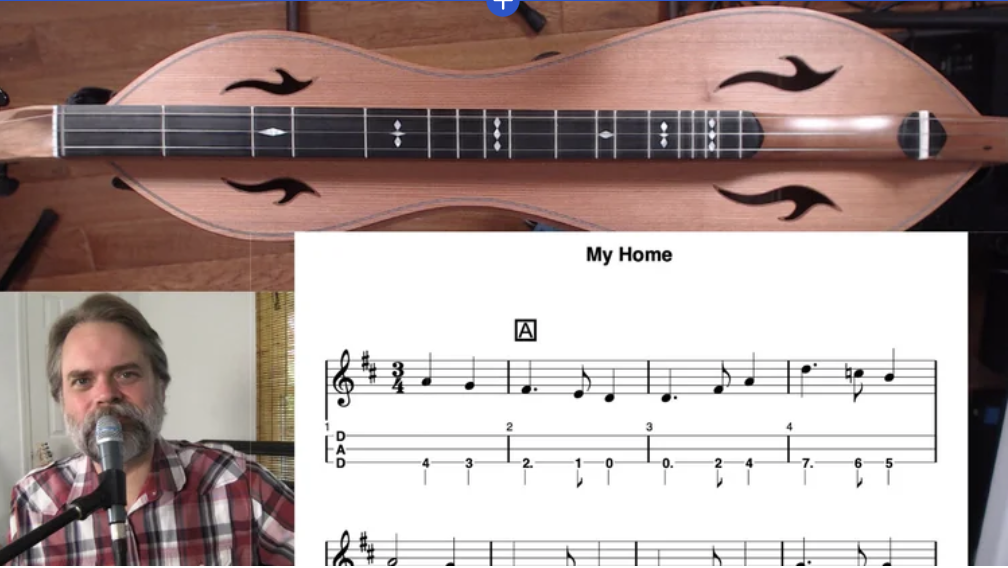
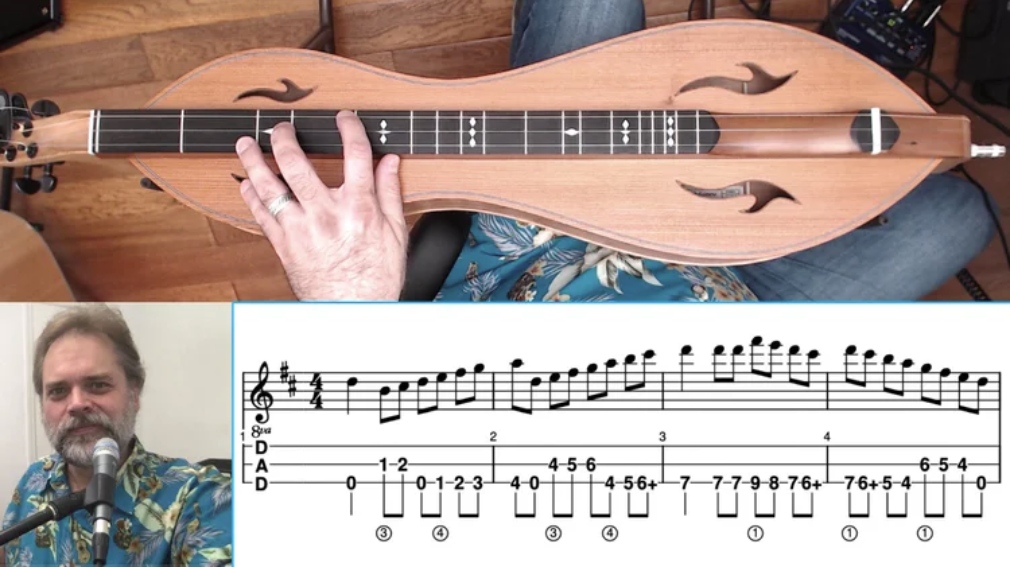
Homepage of Mountain Dulcimer performer and teacher Stephen Seifert.
2026 Fall Online Workshops
Choose a course for mountain dulcimer, harmonica, or ukulele and join me for one hour a week for five weeks. I’ll teach the music and techniques during class. Between meetings, you can use the complete recordings and handouts to review and practice on your own.
September 29–October 28, 2026 Tuesdays & Wednesdays · Live on Zoom
Handouts arrive by email at least 24 hours before each session. The complete session video arrives within 24 hours afterward. Videos will be available for the foreseeable future. Attend live, learn from the recordings, or do both.
The schedule
Each course meets on the same weekday at the same time. All meetings last 60 minutes.
We meet on Zoom. Each course meets once a week for five weeks. I’ll email the Zoom link before the first session and each session’s handouts at least 24 hours before we meet.
You receive every entire session video. All 5 complete recordings are included whether or not you attend live. I’ll email each complete session video within 24 hours after that session. Use them to review, practice along, or catch up on a missed class.
Materials are included. Dulcimer courses include tablature. Harmonica courses include standard music notation and harmonica tablature for every tune we learn by ear. Ukulele courses include song sheets, chord references, and practice materials.
Each course stands on its own. Choose by instrument, level, and subject. You do not need to have taken an earlier series.
See exactly what to play
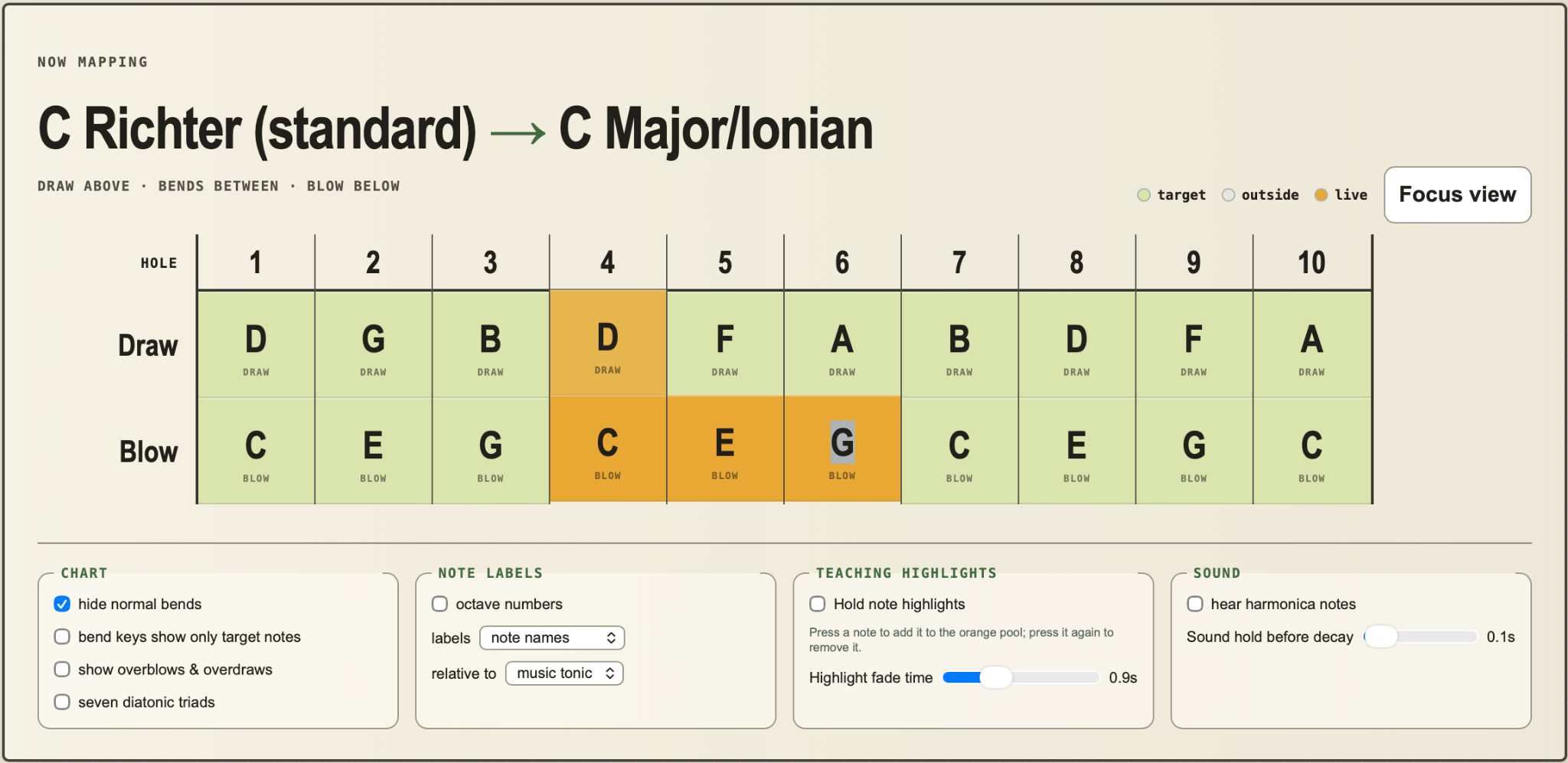
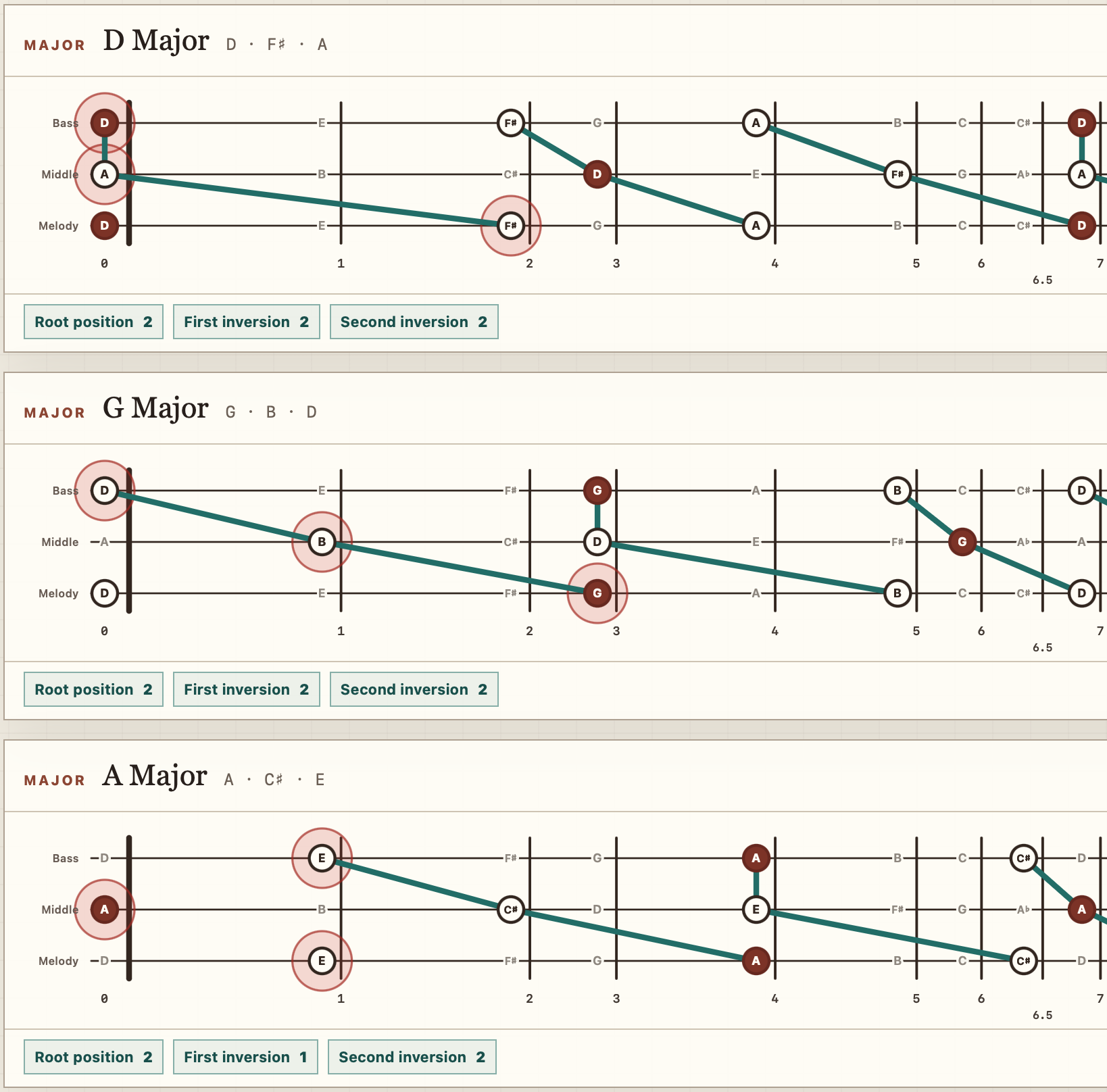
I’ve made new visualization tools for mountain dulcimer, ukulele, and harmonica to help me show what I’m teaching as we play. The dulcimer and ukulele tools show how melody notes and chord shapes fit together, and let me create chord handouts for individual tunes when needed. The harmonica tool highlights the small groups of notes we’re working with, helping you connect what you hear with where to play it as we learn melodies by ear.
Choosing a course
Mountain dulcimer · Novice: You can tune to DAD, read basic tablature, and play a few simple tunes.
Mountain dulcimer · Intermediate: You’re comfortable with ordinary tablature, common chords, and a steady rhythm.
Mountain dulcimer · Upper-Intermediate: You’re comfortable with intermediate music and ready for more demanding fiddle tunes or fingerpicked arrangements.
Mountain dulcimer · Advanced: You’re ready to work through David Schnaufer’s more demanding repertoire, including the alternate tunings and detailed picking and fingering it requires.
Harmonica and ukulele · Novice: Read the descriptions for the instrument requirements and the skills we’ll work on.
Not sure where you fit? Email me and tell me what you’re comfortable playing.
Registration and discounts
Each course is $120 for all 5 one-hour sessions, the complete session videos, and the course materials. Register for the courses you want using the buttons below.
Taking two or more different fall courses? Enter COURSEBUNDLE at checkout for 10% off those courses. Registering for them together is simplest, but you can also register on different days. The discount applies within this series.
Mountain Dulcimer A to Z members: Your 20% live-event discount is available on the member discount page.
Only one discount may be used per order. A to Z members should use their 20% member code instead of the 10% multiple-course code. Discounts do not combine.
If you register on different days or forget the code, email me and I’ll help you get the discount.
Course descriptions
You asked what we’ll be playing, so I’ve added a repertoire list to every course description. All the arrangements and handouts for these courses are new and have never been shared with my students.
Most players would rather play simple things well than play difficult things poorly. I’ll bring a collection of good tunes and show you how to keep them steady, clean, and moving from beginning to end.
We’ll start with the melody against the drones, then add easy backup chords, simple chord-melody, and a few slides, hammer-ons, and pull-offs. We’ll also use a capo. I want to help you get more music out of the things you already know and give you a few new things to work on.
You should be able to tune your dulcimer to DAD, read basic tablature, and play a few simple tunes. Bring a capo. Tablature and practice materials will be provided.
Tunes covered include:
“Grandfather’s Clock”
“Life’s Railway to Heaven”
“Going Down to Cairo”
“The Cajun Waltz”
“Red Wing”
All the arrangements and handouts for this course are new and have never been shared with my students. I’ll email each session’s handouts at least 24 hours before we meet, so you have time to print them and look through the music.
I’ll record each entire live session from beginning to end and email you the complete video within 24 hours after each session, whether or not you attend live. You’ll receive all five complete session videos to review and practice along at your own pace. Videos will be available for the foreseeable future.
You really can learn to play harmonica by ear. We’ll start with short musical ideas and familiar folk tunes, then work toward playing whole melodies.
I’ll use my new harmonica visualization tool to show the small groups of notes we’re hearing and exactly where to play them. We’ll learn melodies by ear in manageable chunks, listening, playing things back, and looking for the bits that repeat. We’ll also work on clean single notes, breathing, rhythm, tremolo, scales, and simple chords with melodies.
You won’t have to depend on memory alone. You’ll receive standard music notation and harmonica tablature for every tune we cover by ear.
This is a novice course. Some experience holding the harmonica and making sounds is helpful; clean single notes are something we’ll work on together. Bring a ten-hole diatonic harmonica in the key of D. A regular or low D is fine.
Tunes covered include:
“Turkey in the Straw”
“No Night There”
“Believe Me, If All Those Endearing Young Charms”
“Beautiful Dreamer”
“Home on the Range”
Here are some harmonicas I play regularly. Prices are approximate.
East top Lightning Harmonica, Advanced Diatonic Harmonica, key of D — $39.89.
East top MAXWELL ST Blues Harmonica, key of D — $39.99.
Hohner Special 20 Harmonica, key of D — $58.99.
Seydel 1847 Classic, key of D or LD (Low D) — $99.95.
Choose normal Richter tuning for this class. Regular D will be easy to find, but you might have to search for low D. The regular D harmonica is good when you’re playing with a group—you’ll be heard. Low D has a great sound, but it can be hard for you and the other players to hear it in a group. I like regular D for jams and low D for home or solo.
Make sure you shop around. I’ve ordered from rockinronsmusic.com with great success. The other brands they sell play well, and I even own some of them. Amazon can be great, but you have to make sure you’re not accidentally ordering the wrong key or tuning. You might have to click around to find a low D.
All the arrangements and handouts for this course are new and have never been shared with my students. I’ll email each session’s handouts at least 24 hours before we meet, so you have time to print them and look through the music.
I’ll record each entire live session from beginning to end and email you the complete video within 24 hours after each session, whether or not you attend live. You’ll receive all five complete session videos to review and practice along at your own pace. Videos will be available for the foreseeable future.
Register for this course · $120Back to scheduleI’ll use my new harmonica visualizing tool to show exactly which holes to play and when to blow or draw as we learn by ear. This example shows C; bring a D harmonica for class.
I’ll show you how I mix picking and strumming to make a tune sound full without making it harder than it needs to be. We’ll put the right hand to work with favorite jam tunes, paying close attention to rhythm, string changes, and clean fingering.
We’ll play melodies across the strings and in different octaves, add just enough chord to support them, and try a few variations, intros, and endings. Once you get the moves, you can use them on plenty of other tunes.
You should be comfortable reading tablature, keeping a steady rhythm, and forming common chords. DAD tuning. Bring a capo. Complete tablature will be provided.
Tunes covered include:
“Cripple Creek” in G (capo 3)
“Joshua Fought the Battle of Jericho” in E minor (capo 1)
“Silly Bill” in G (capo 3)
“Arkansas Traveler” in D
“Chinese Breakdown” in D and A (capo 4 for A)
All the arrangements and handouts for this course are new and have never been shared with my students. I’ll email each session’s handouts at least 24 hours before we meet, so you have time to print them and look through the music.
I’ll record each entire live session from beginning to end and email you the complete video within 24 hours after each session, whether or not you attend live. You’ll receive all five complete session videos to review and practice along at your own pace. Videos will be available for the foreseeable future.
How do you choose a chord when there isn’t one printed above the melody? And once you choose it, where do you put your fingers? I’ll show you how I use three main chord shapes to find major and minor chords, then put them to work with real music.
We’ll start with the shapes, find them in different places, and use melody notes to choose chords that fit. Then we’ll turn it around and use chords to find notes for melodies, harmonies, and fills. We’ll also use the shapes for backup and simple chord-melody.
We’ll work with familiar musical examples as we look at chord families, common progressions, keys, and the number system. I want you to hear why a chord works and know how to try another choice. You don’t have to memorize a thick chord book.
I’ll use my new dulcimer visualization tool to show exactly where to put your fingers and how the notes, chords, and shapes fit together. It also lets me create chord handouts for individual tunes when needed.
You should be comfortable reading tablature and playing a few common chords. DAD tuning. Bring a capo. Tablature and printed chord reference materials will be provided.
Tunes covered include:
“Morning Has Broken” in D
“Southwind” in D and G (capo 3 for G)
“A Mighty Fortress is Our God” in D
“El Cóndor Pasa” in E minor (capo 1)
“The Star-Spangled Banner” in D
All the arrangements and handouts for this course are new and have never been shared with my students. I’ll email each session’s handouts at least 24 hours before we meet, so you have time to print them and look through the music.
I’ll record each entire live session from beginning to end and email you the complete video within 24 hours after each session, whether or not you attend live. You’ll receive all five complete session videos to review and practice along at your own pace. Videos will be available for the foreseeable future.
I’ll show you how to play every song we cover in three steps. First, we’ll learn the chords so you can back up singing or another instrument. Next, we’ll learn to play the melody on its own. Then we’ll put the chords and melody together and play both at the same time. That’s called chord-melody, and we’ll keep the arrangements simple.
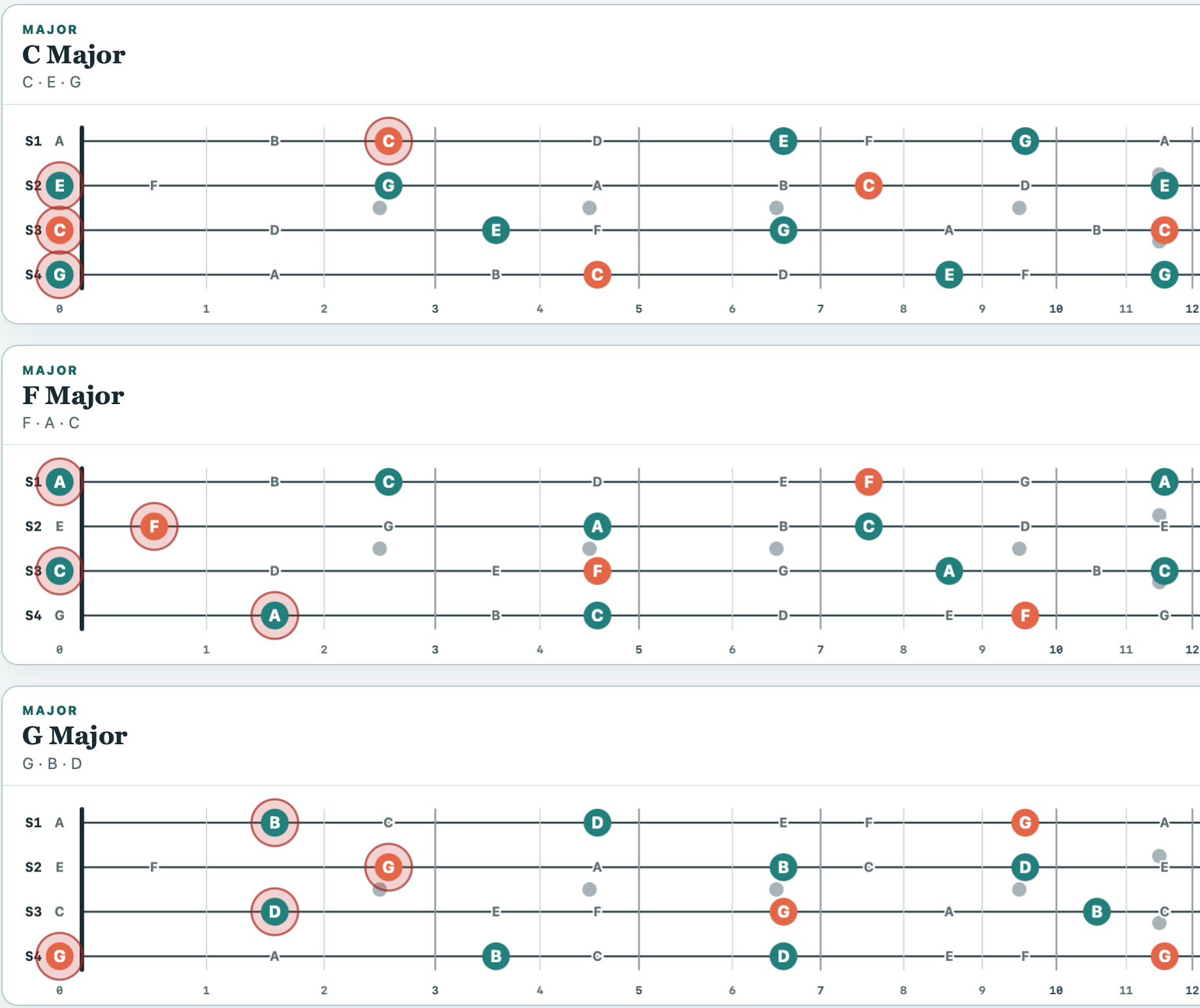
We’ll work on steady strumming, smooth chord changes, and a little fingerpicking. I’ll show you where the melody notes sit around familiar chord shapes, using my new ukulele visualization tool to show exactly which strings and frets to play. I can also use it to make chord handouts for individual tunes when needed. We’ll start simply and add a little at a time.
This is a novice course. You should have some experience playing your ukulele and know a few basic chords. Bring a four-string soprano, concert, or tenor ukulele tuned GCEA. Either a regular high G or a low G is fine. Song sheets, chord references, and practice materials will be provided.
Tunes covered include:
“Aura Lea” / “Love Me Tender”
“Shenandoah”
“Red River Valley”
“Simple Gifts”
“Loch Lomond”
All the arrangements and handouts for this course are new and have never been shared with my students. I’ll email each session’s handouts at least 24 hours before we meet, so you have time to print them and look through the music.
I’ll record each entire live session from beginning to end and email you the complete video within 24 hours after each session, whether or not you attend live. You’ll receive all five complete session videos to review and practice along at your own pace. Videos will be available for the foreseeable future.
Register for this course · $120Back to scheduleMy new ukulele visualizing tool will help you see exactly which strings and frets to play as we learn the chords, the melody, and then both together.
06
Join the Jam II: Fiddle Tunes for Upper-Intermediate Strummers
Let’s dig into some of the more demanding fiddle tunes from my second Join the Jam book. These are the kinds of tunes that turn up when the more experienced players keep the jam going. If you can keep a steady strum and are ready to give both hands a little more to do, come join me.
We’ll work on the strum hand, clean fingering, and keeping the melody going through the busy spots. I’ll break down the harder moves, show you how I work them out, and help you put the tune back together without losing its rhythm. We’ll mainly be strumming, with the fiddle tunes giving us plenty to work on.
You should be comfortable reading tablature, keeping a steady strum, and playing intermediate fiddle tunes. We'll use DAD tuning plus capo and explore just a little bit of DGD. Tablature for the tunes we cover will be provided; you don’t need to buy the book or take another course first.
Tunes covered include:
“Billy in the Low Ground” in D
“Cricket on the Hearth” in D
“Big Scioty” in G (DAD capo 3 and DGD no capo)
“Greasy String” in G
“Avalon Quickstep” in D
All the arrangements and handouts for this course are new and have never been shared with my students. I’ll email each session’s handouts at least 24 hours before we meet, so you have time to print them and look through the music.
I’ll record each entire live session from beginning to end and email you the complete video within 24 hours after each session, whether or not you attend live. You’ll receive all five complete session videos to review and practice along at your own pace. Videos will be available for the foreseeable future.
These are some of the nicest melodies on the planet. We’ll sample the English folk music world that includes Ralph Vaughan Williams and Steeleye Span, using fingerpicking to let the melodies sing. This is an all-new selection of music compared with my past workshops on fingerpicked folk songs from England.
I’ll show you how to support a tune with chords and fill in around it without covering it up. We’ll work on a relaxed right hand, clean notes, smooth chord changes, and different ways to play the same verse. I especially want to help you play a song more than once without making every verse sound exactly the same.
We’ll work through complete arrangements, and I’ll show you how to use the same ideas with other music. This course is for upper-intermediate players. You should be comfortable with common chords and ready to spend time working on your right hand. DAD tuning. Bring a capo. Complete tablature will be provided.
Tunes covered include:
“As Sylvie Was Walking”
“The Green Bed”
“John Barleycorn”
“Lisbon”
“The Royal Oak”
“One Night as I Lay on My Bed”
All the arrangements and handouts for this course are new and have never been shared with my students. I’ll email each session’s handouts at least 24 hours before we meet, so you have time to print them and look through the music.
I’ll record each entire live session from beginning to end and email you the complete video within 24 hours after each session, whether or not you attend live. You’ll receive all five complete session videos to review and practice along at your own pace. Videos will be available for the foreseeable future.
David Schnaufer was my mentor. He’s still my favorite player. I’ll share music from his repertoire along with the techniques you’ll need to make it happen. His playing changed the way I think, hear, and play music, and I want to show you some of the things that made such an impression on me.
We’ll work through the arrangements, sort out the fingering and picking, and spend time on the details that give each tune its character. I’ll show you how I work through the harder passages and how to keep the melody going while the hands have plenty to do.
This course is for advanced players who are ready to work on more demanding music. We’ll use a three-string dulcimer in DAD, DGD, and DAC tunings. Bring a capo; I’ll explain the tuning and capo setup for each piece. Complete tablature will be provided.
Tunes covered include:
“Beautiful Dreamer” in G (capo 3)
“Down Yonder” in G and D (capo 3 for one arrangement)
“Greensleeves” in D minor (DAC tuning)
“The Almaine” in D minor (DAC tuning)
“When Silence Was Golden” in A (capo 4)
All the arrangements and handouts for this course are new and have never been shared with my students. I’ll email each session’s handouts at least 24 hours before we meet, so you have time to print them and look through the music.
I’ll record each entire live session from beginning to end and email you the complete video within 24 hours after each session, whether or not you attend live. You’ll receive all five complete session videos to review and practice along at your own pace. Videos will be available for the foreseeable future.
No. I’ll email the complete video of every entire session within 24 hours afterward, whether or not you attend live. If the revised final date doesn’t work for you, that session is included too. You can watch and practice along on your own schedule.
How long will the videos be available?
Videos will be available for the foreseeable future.
What should I bring?
For mountain dulcimer, bring a capo and use DAD tuning unless your course description says otherwise. For harmonica, bring a ten-hole diatonic in D; regular or low D is fine. For ukulele, bring a four-string soprano, concert, or tenor tuned GCEA, with high or low G.
Any advice on purchasing a harmonica?
Here are some harmonicas I play regularly. Prices are approximate.
East top Lightning Harmonica, Advanced Diatonic Harmonica, key of D — $39.89.
East top MAXWELL ST Blues Harmonica, key of D — $39.99.
Hohner Special 20 Harmonica, key of D — $58.99.
Seydel 1847 Classic, key of D or LD (Low D) — $99.95.
Choose normal Richter tuning for this class. Regular D will be easy to find, but you might have to search for low D. The regular D harmonica is good when you’re playing with a group—you’ll be heard. Low D has a great sound, but it can be hard for you and the other players to hear it in a group. I like regular D for jams and low D for home or solo.
Make sure you shop around. I’ve ordered from rockinronsmusic.com with great success. The other brands they sell play well, and I even own some of them. Amazon can be great, but you have to make sure you’re not accidentally ordering the wrong key or tuning. You might have to click around to find a low D.
How will I get the Zoom link and materials?
I’ll email the Zoom link before the first session. Each session’s handouts will arrive by email at least 24 hours before we meet, so you can print them and look through the music. I’ll email the complete session video within 24 hours after each session.
Can I take more than one course?
Yes. Choose the combination that fits your interests and practice time. Each course has its own registration.
Do I need to read music for harmonica?
We’ll learn primarily by ear. You’ll also receive standard notation and harmonica tablature for every tune we cover, so you have a written reference for practice.
Do I need to have taken an earlier series?
No. Each course stands on its own. Use the level and description to decide whether it is a good fit.
How do the discounts work?
Taking two or more different fall courses? Enter COURSEBUNDLE at checkout for 10% off those courses. Registering for them together is simplest, but you can also register on different days. The discount applies within this series.
Mountain Dulcimer A to Z members: Your 20% live-event discount is available on the member discount page.
Only one discount may be used per order. A to Z members should use their 20% member code instead of the 10% multiple-course code. Discounts do not combine.
If you register on different days or forget the code, email me and I’ll help you get the discount.